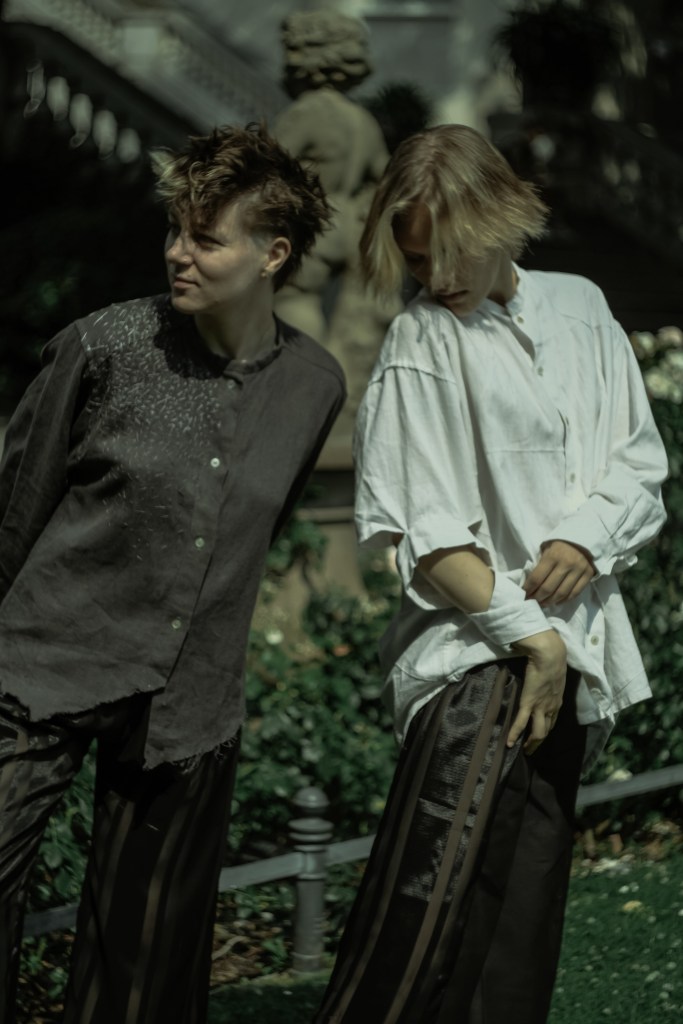
Photography Maria Monstera
Models shona.designs & dariam.kd
Almira didn’t set out to become a fashion designer. She spent years behind the scenes—first as a magazine editor in Saint Petersburg and Moscow, then shifting into developing creative spaces and organizing festivals.
But fashion was always somewhere in the background. Growing up in a small town in the Urals, Almira learned to sew by hand from her mother, a stylish, resourceful woman who shared both skill and love for making things. This is how her first creations were dresses for her dolls, “My Barbies had perfectly tailored outfits,” she says. “It became our little tradition with my mom to buy a new Burda issue every month, plan what to sew, and search for fabric together.” It wasn’t easy to find, especially in a small town, but they made it work.
Still, Almira never imagined sewing would be part of her adult life. Since sewing requires precision and accuracy, she thought she was too impatient for it. People told her that, too—that she didn’t have the temper. It wasn’t until years later that she found herself flipping through those old Burda issues again and decided to buy a sewing machine—just like that.
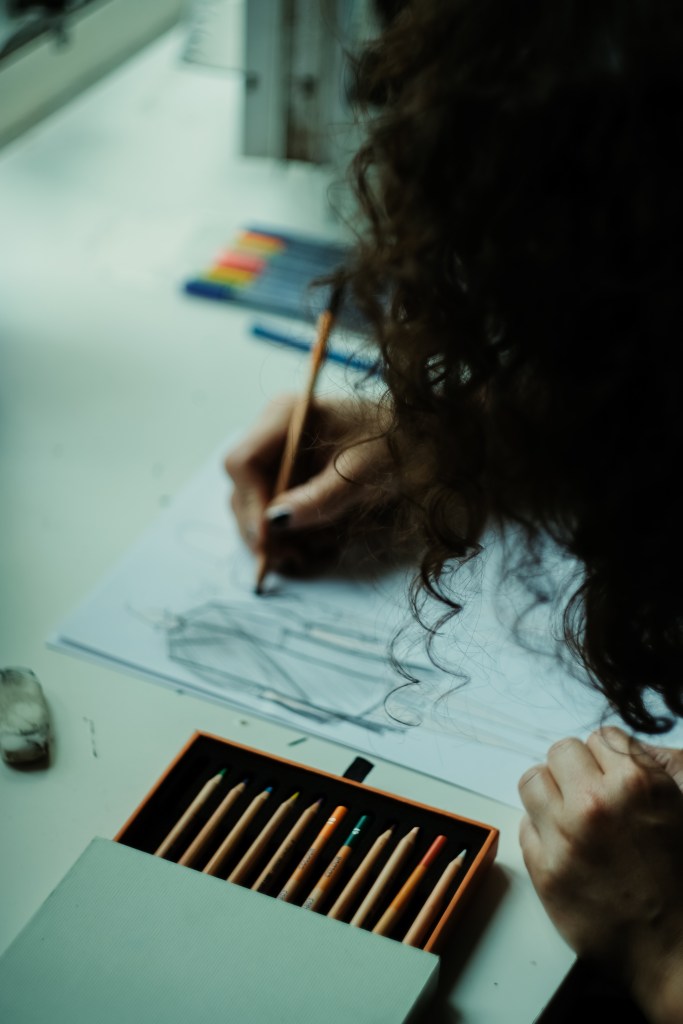
The first attempts were rough, but things started to come together quickly. She signed up for sewing courses and began to understand garment construction, measurements, and how to work with different fabrics. At the same time, she began sketching again, creating mood boards, and testing out techniques. When she moved to Berlin, the sewing machine came with her. It wasn’t long before her focus shifted. She started putting together the foundation for her own brand. “The brand is called Caché. I love the sound of the word—it’s like a whisper.” It reflected everything she was drawn to: asymmetry, deconstruction, cross-stitch embroidery, and small hidden elements.

Dressing with intention
For Almira, starting her own brand wasn’t just about design—it was about intention. After years of managing creative projects for other people, she wanted to build something personal. That’s how Caché became rooted in the values of slow fashion.
“I value quality and uniqueness,” she says. “I don’t think clothes should be disposable or cheap.” But she’s quick to clarify that her approach isn’t rigid: “I also like to leave space for experimentation and to be a bit fluid in how I define slow fashion for myself. I try to make thoughtful choices. But yes, I do ship with DHL. Does that make me less sustainable?”
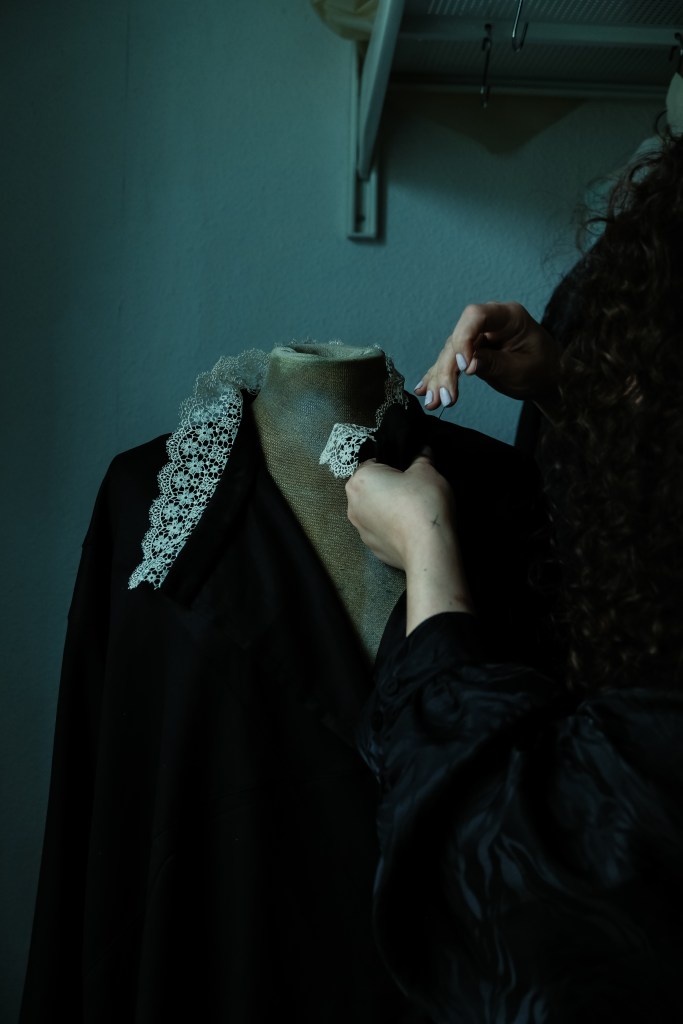
What matters most to Almira is time—how much of it she invests in each garment, and how that translates into the final piece. She sews everything herself, often adding hand embroidery or painted elements. “I think the longer the fabric is touched, the more power and strength it gets, and that can be transferred to the customer.”
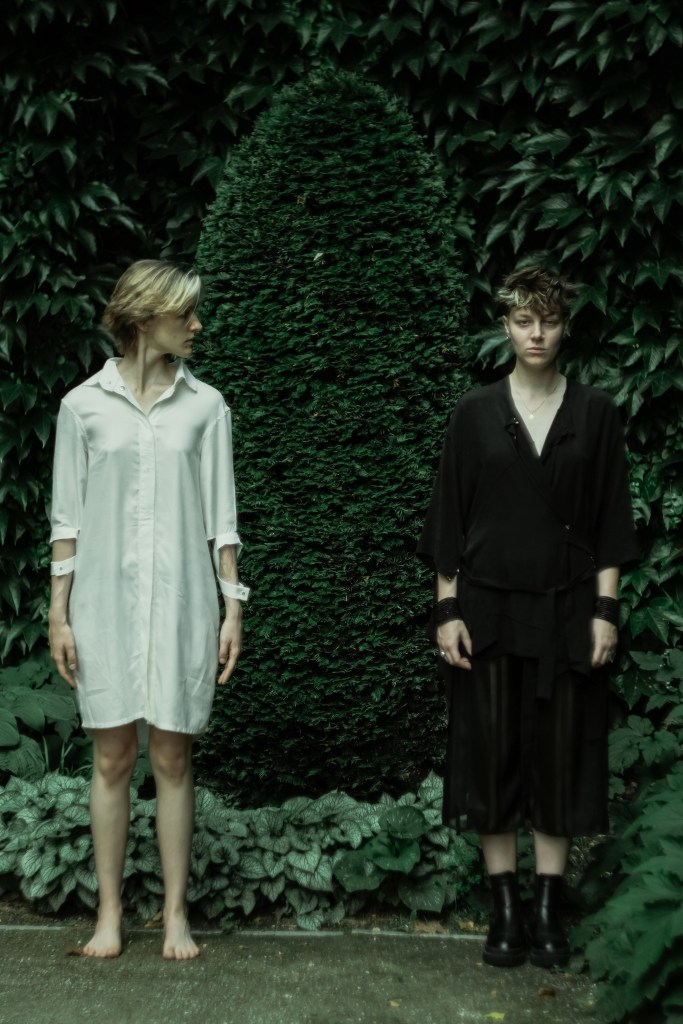
This care and slowness are part of Caché’s identity. One of the brand’s taglines—“unique urban armor”—captures the essence of how her creations are meant to feel when worn. “Clients often tell me they save their pieces for special moments when they need an additional bit of sassiness and support.” This is mainly because her identity translates to designs with strong personalities. It consists of oversized shirts, asymmetrical dresses and kimonos, loose pajama pants and shorts, and deconstructed accessories.
Smart, versatile, dark, and a little mysterious—with just the right touch of passive-aggressive charm.
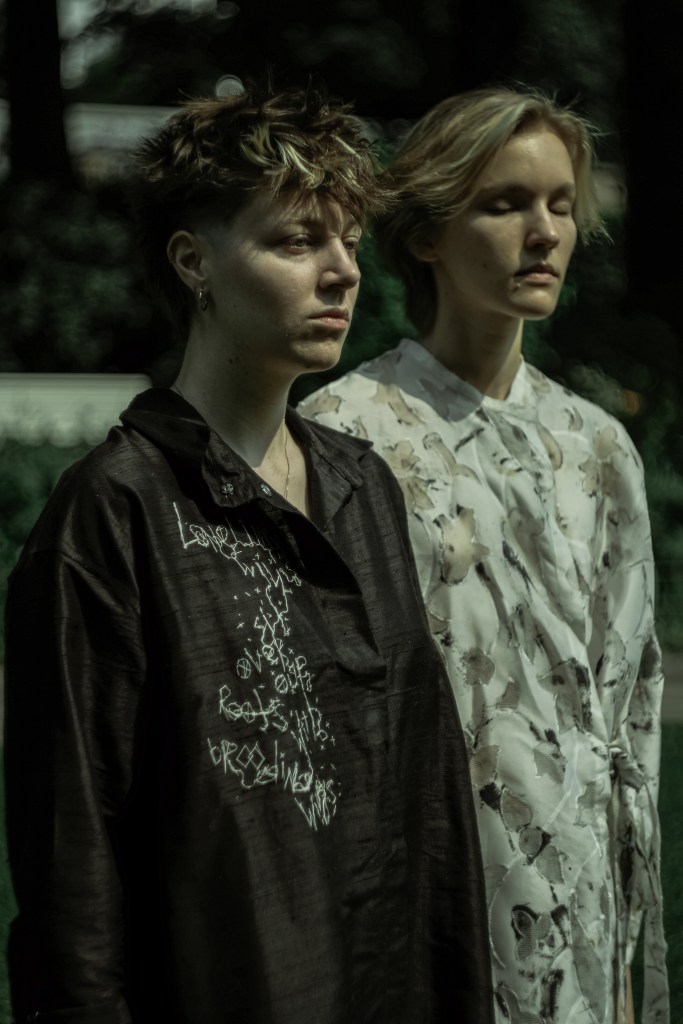
The chaotic world of embroidery is central to the brand—a form of expression that resists easy interpretation. You have to pause, look closer, and let the design reveal itself. The garments are the same: they don’t shout for attention. They wait to be truly seen.
And then, there’s Alfred —the unexpected sidekick who has quietly become part of the brand’s identity. He arrived from Turkey over three years ago, without a name—and, as Almira puts it, “not much of a personality.”
He was meant to be a foster, but after some time together, giving him away was no longer an option. Now, Alfred is a constant presence in Almira’s life and work. Calm, silent, fierce, and independent, he’s become part of Caché—and might even have a little fan club of his own.
The Process: A Controlled Chaos
Almira describes her creative process as “a controlled chaos.” Sometimes, it starts with a clear plan—sketches, mood boards, a chosen pattern that she’ll modify to suit the vision. She sews the garment carefully, then layers on the final touches: embroidered words, painted elements, or small deconstructed details.“In those cases, I treat the piece like a canvas,” she says.
Other times, it’s the fabric that drives the process. “I might simply fall in love with a particular fabric and freestyle from there,” she explains.
Finding fabric is its own kind of creative work. She sources materials in different ways: sometimes buying Tencel and wool from other designers after they close their businesses, other times from certified online shops, or by hunting through local fabric stores. Occasionally, she’ll thrift a piece that catches her eye, but since secondhand fabrics are often polyester, she ends up using them only for accents or linings. “It’s always a bit of a hunt,” she says. And because of that, most pieces are hard to repeat.
Her favorite material is, hands down, raw silk. Since it’s not widely used, she finds it in only one place in Berlin—and even then, only in small quantities. “It has this matte texture and perfect weight.” She also loves working with Tencel and modal for their soft, fluid feel, and prefers natural fabrics like wool, linen, and—less often—cotton.
What connects it all is intention: Almira chooses her fabrics as carefully as she builds each garment. The process is slow, personal, and never rushed—and that’s exactly the point.
Looking Ahead
Almira recently moved into a new shared studio with a close friend—someone she hopes will become her future business partner. Together, they’re building something bigger than just a workspace. They call it Caché Space—a project that aims to bring together their creative skills, experience, and community, both physically and digitally.
“We’re still figuring things out,” Almira says. “There’s a lot of uncertainty, and I do struggle with imposter syndrome sometimes. But I believe we’re on the right track.”
The long-term vision is ambitious but grounded in their shared values: a larger studio with in-house production, a showroom, and space to host events or creative collaborations. A place where fashion and community can coexist. There’s also the goal of building an online platform—something Almira admits feels outside her comfort zone, but she’s always willing to learn.
For those seeking a meaningful, unique investment in fashion pieces, be sure to visit Caché website and socials:
https://instagram.com/cache_berlin